


Building a cloud before the tooling existed
Altus IT is a Croatian datacenter that built its business on physical colocation and hardware rental. In 2014, when the cloud market was still forming and most of the tooling we take for granted today did not exist, they made the decision to launch their own IaaS offering. We were brought in to conceptualize, design, build, and deploy a complete cloud orchestration platform from scratch. The result is Altus Cloud, a custom IaaS platform built on OpenNebula, with a self-service user area, a full internal ERP, and a credit-based billing model that keeps consumption transparent and controlled. It was one of the first cloud infrastructure services located entirely in Croatia.

Custom IaaS platform built on OpenNebula in 2014

Credit-based billing model designed to prevent runaway costs

Pioneer cloud infrastructure located entirely in Croatia
A 2014 bet on a market that had not arrived yet
Altus IT had deep expertise in running physical infrastructure. Their datacenter in Zagreb was ISO 27001 certified, carrier-independent, and connected to the largest Tier 1 hub in Croatia. What they lacked was a digital product. In 2014, cloud computing was still consolidating globally and the Croatian market was far behind the curve. Their clients were beginning to ask about virtual resources rather than rented hardware, and Altus had a clear infrastructure advantage to build on.
A greenfield build with no proven playbook
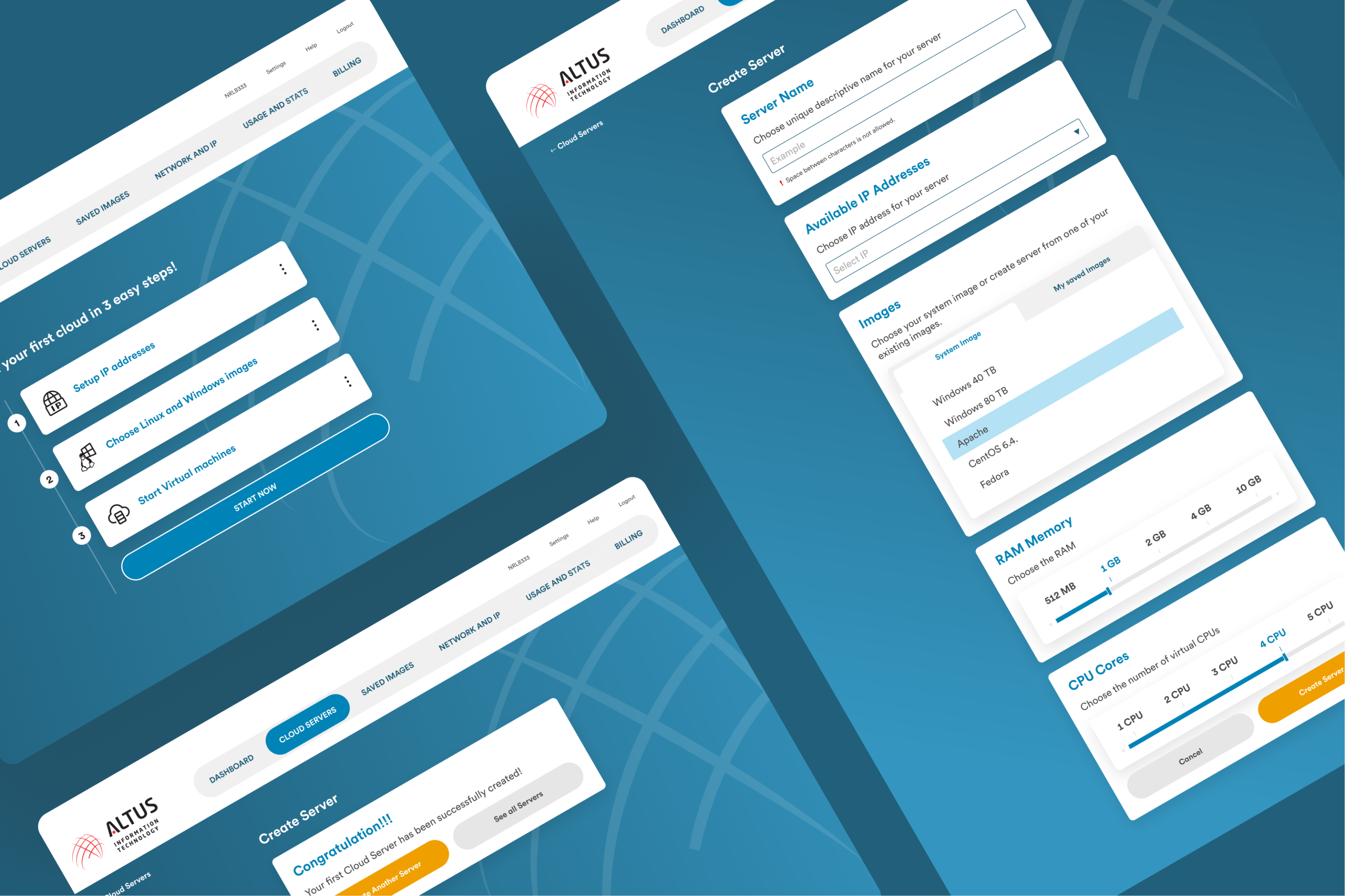
Because there was no legacy system to migrate, the project started from a blank slate. That sounds simpler than it was. In 2014, the tooling for cloud orchestration was immature, open-source options were limited, and there was no established pattern for building a self-service cloud platform. The Altus team had no prior experience operating a digital product of this kind. We chose OpenNebula as the infrastructure layer and built three interconnected systems on top of it: a customer-facing user area for managing virtual machines and credits, an internal ERP for handling users, invoices, and transactions, and a scheduling engine that runs automated background jobs every night.
Billing logic that protects the user
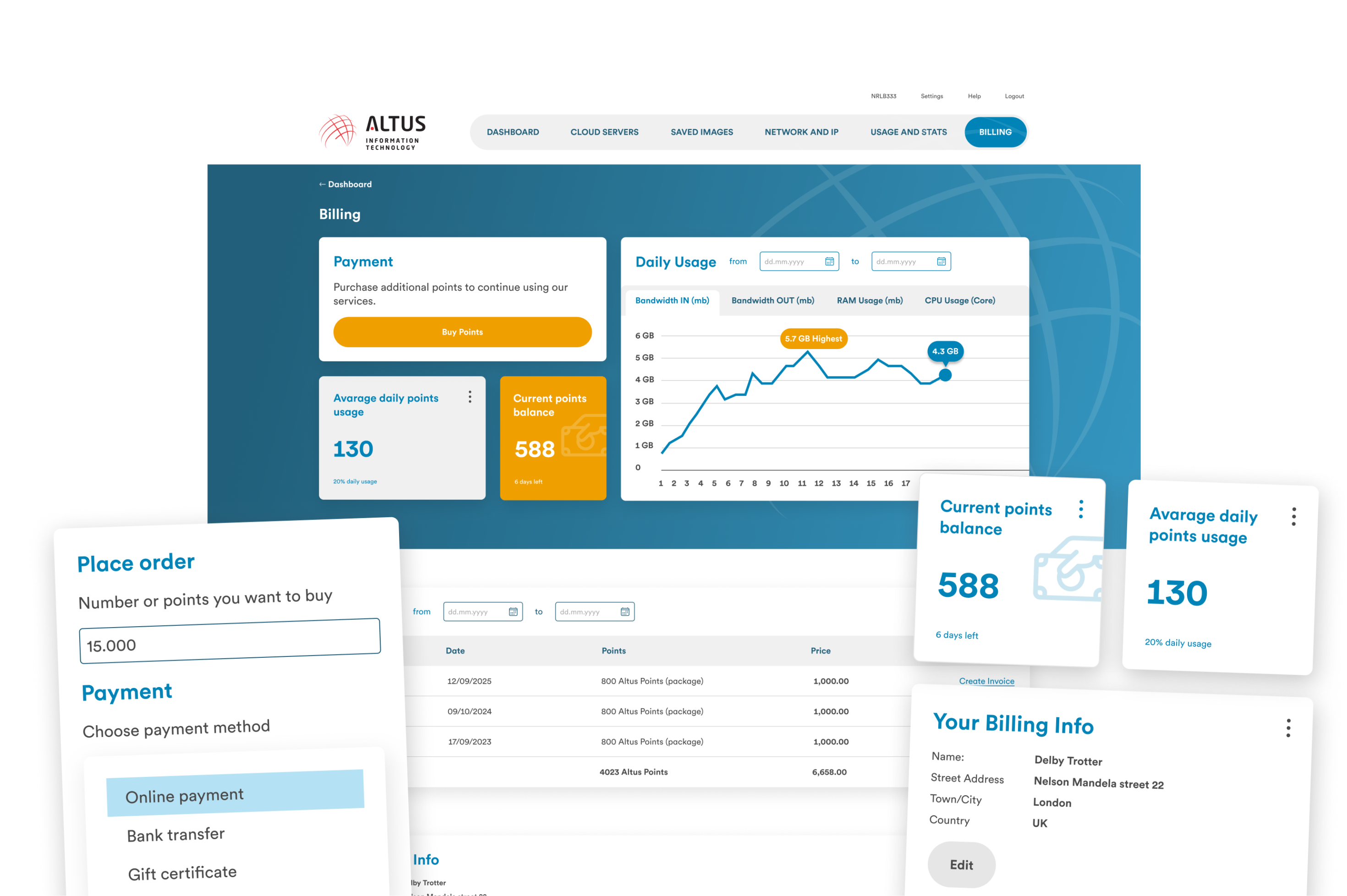
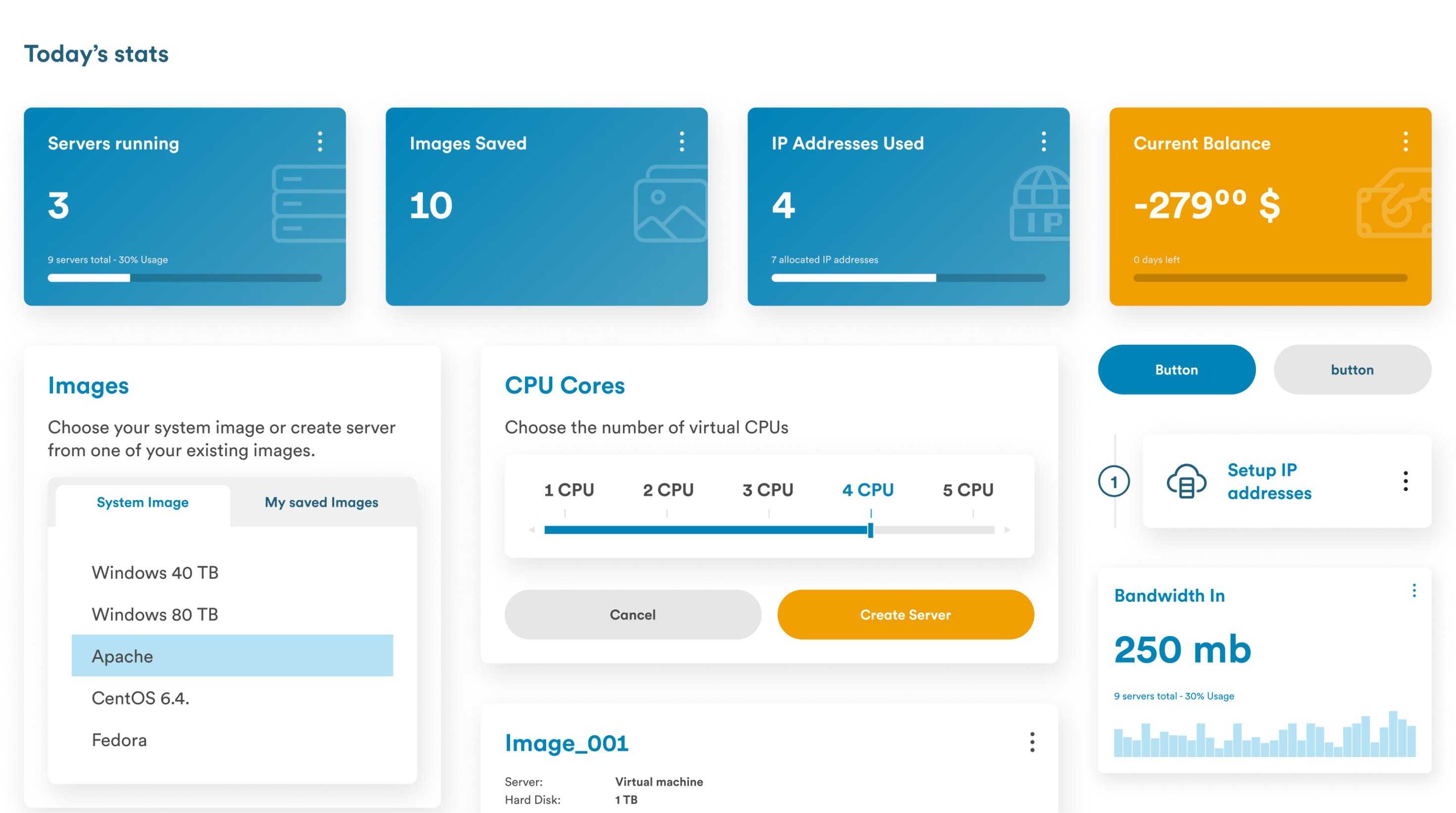
One decision shaped the whole product: billing had to be boring in the best possible way. Cloud infrastructure is easy to misconfigure, and a single oversight can cause a customer’s monthly bill to spike without warning. We implemented a credit-based purchasing system where users buy credits in advance and consume them against their active services. This gives users full visibility into their spending before it happens and removes the risk of uncontrolled consumption. The same logic shaped the feature set for the first release: we kept configuration options deliberately constrained so new users could get comfortable with the platform before accessing more granular controls.
Automation running in the background
The scheduling engine is the operational backbone of the platform. Every night at 2:00 AM it generates invoice drafts from recurring templates. At 3:00 AM it imports virtual machine accounting records from OpenNebula into the ERP database. At 4:00 AM it runs the most resource-intensive job: importing monitoring data across all active virtual machines. This automation removed the need for manual billing operations and ensured that consumption data was always current. A separate XML bridge syncs the master data from the Altus ERP to Luceed, the external accounting software, keeping financial records consistent across systems.
Making infrastructure understandable
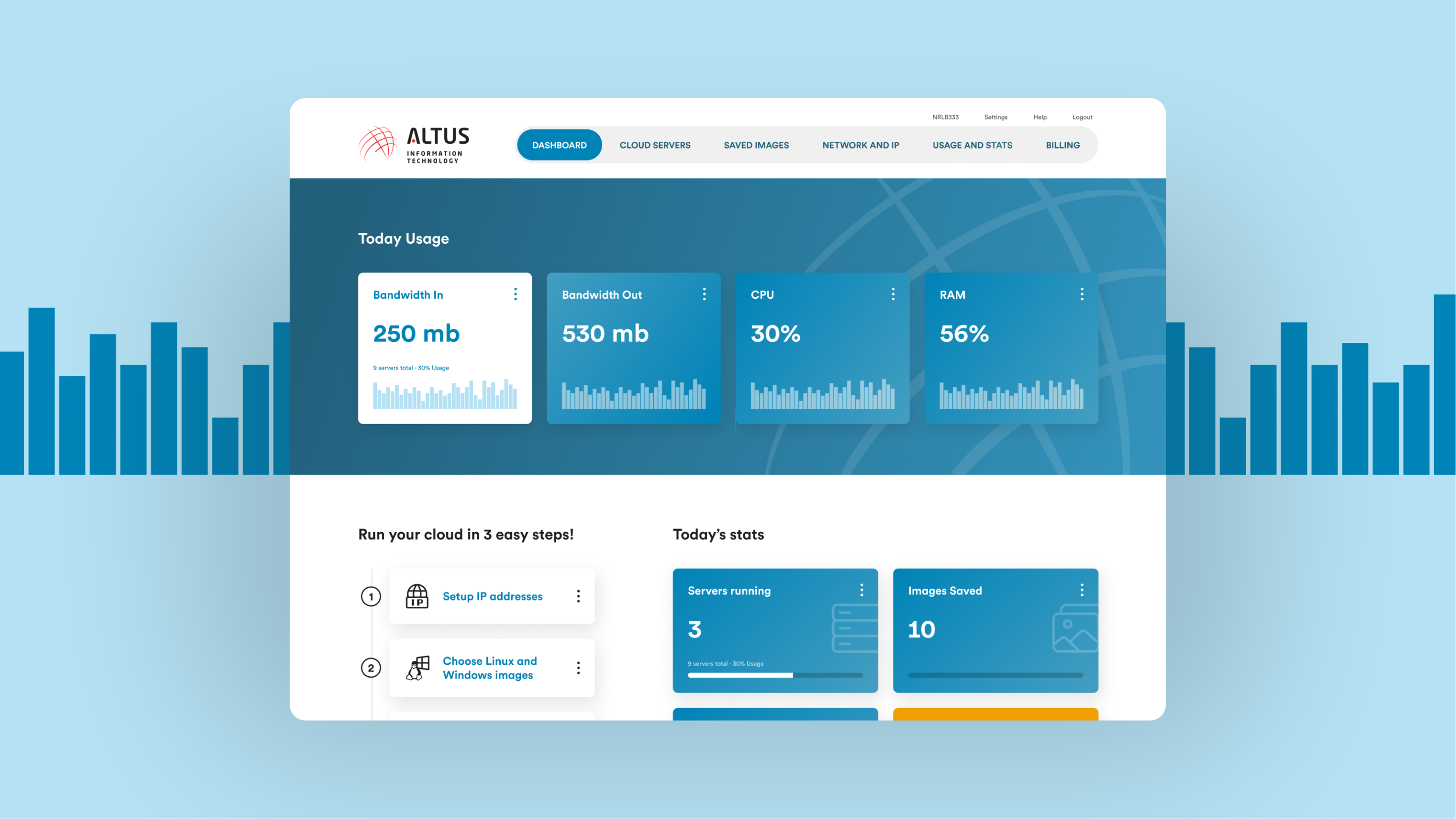
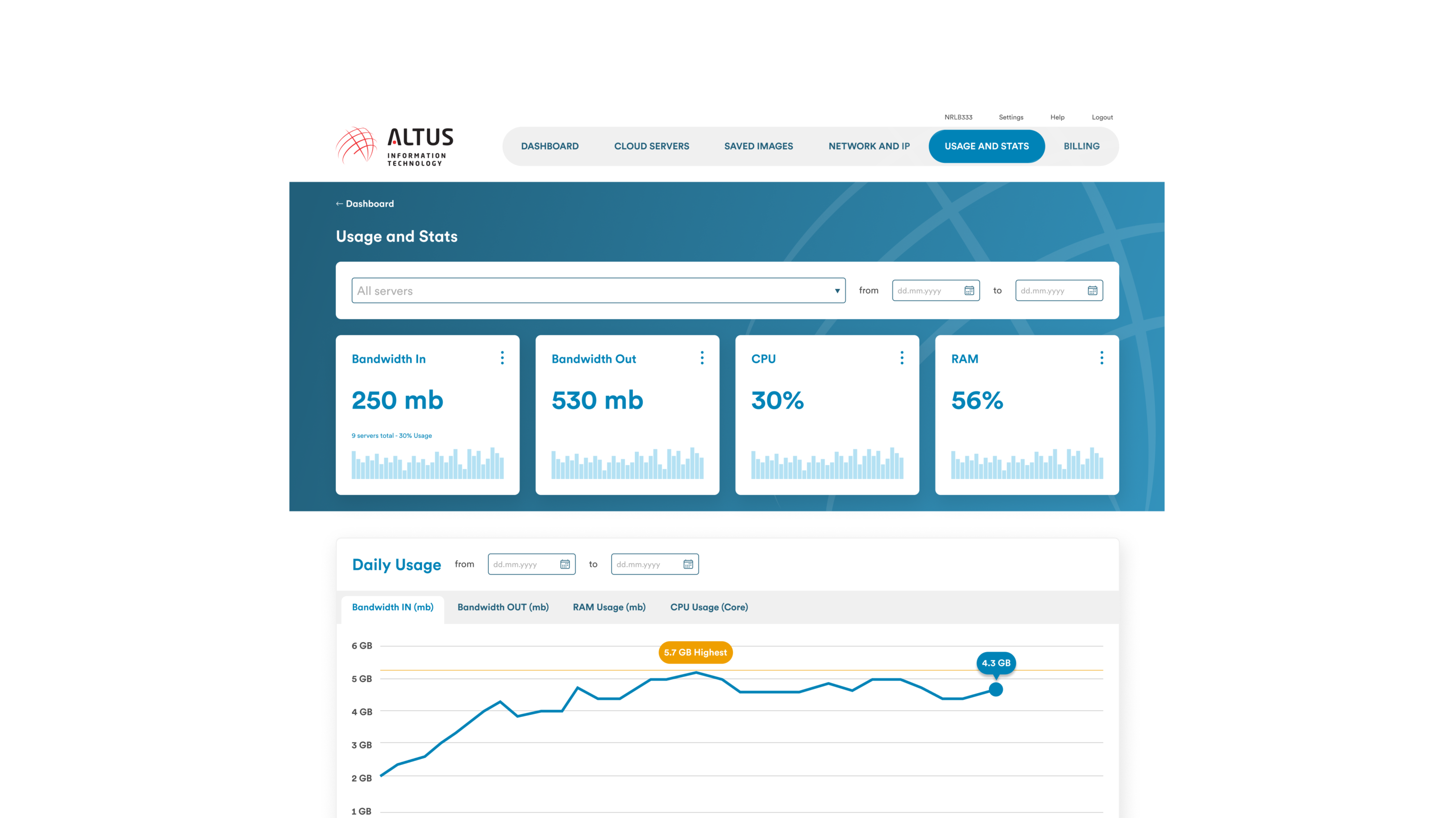
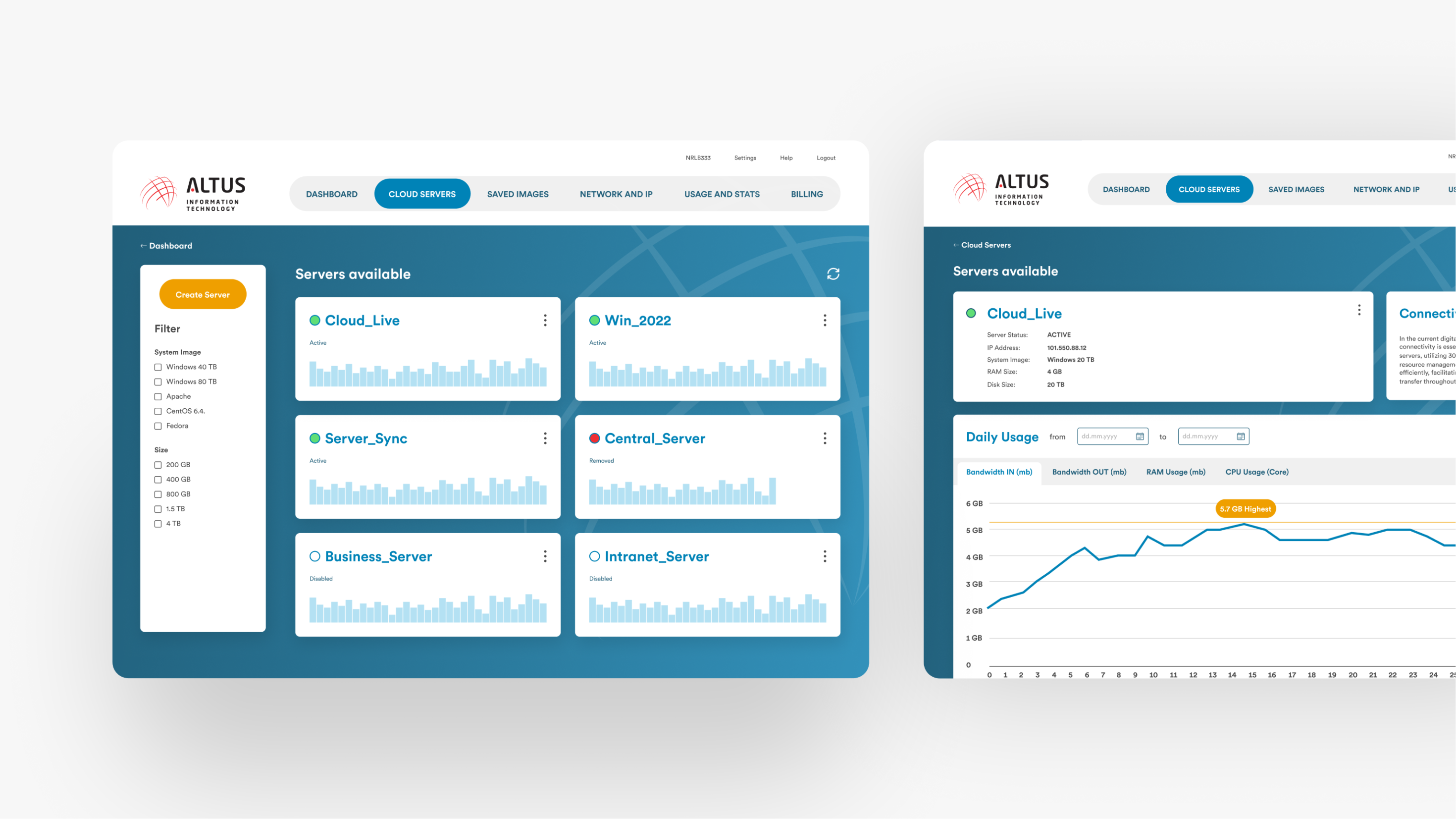
The user interface had one job: make server management feel approachable to people who had never provisioned a virtual machine before. We structured the dashboard around the most frequent actions – credit balance, active virtual machines, and current consumption – and kept billing and technical configuration in separate navigation areas. The Altus brand palette, built around deep blue and amber, gave us a clear visual language for highlighting critical actions without cluttering the interface. The goal was to reduce the cognitive load of using the product.