

Nominis podcast – episode 089: Magento, yesterday, today, tomorrow
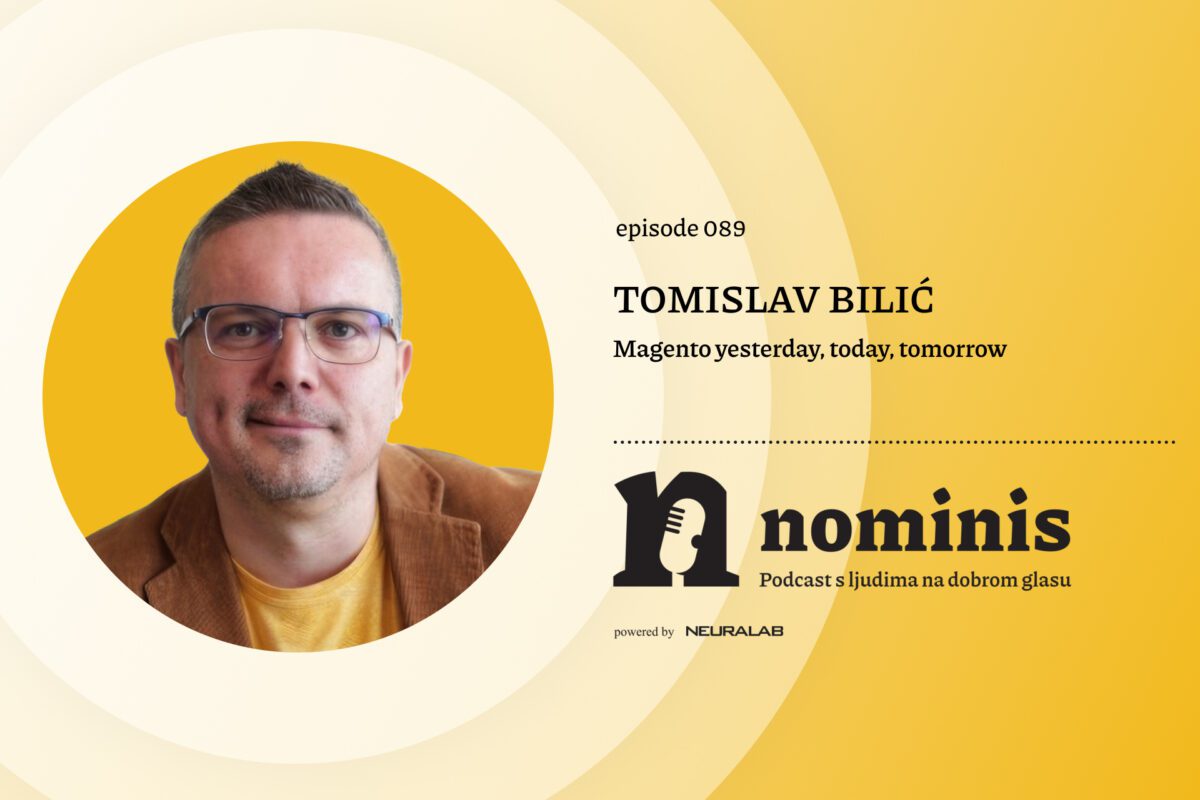
In Nominis episode 089, we talk about Magento, one of the first platforms built specifically for eCommerce. Tomislav Bilić, founder of Inchoo, shares how Magento shaped the development of his agency, why the platform went through a difficult period, and why he believes it still has a strong future for more complex online businesses.
In the new episode of Nominis podcast which we are producing in partnership with the Association of eCommerce Croatia, Marcel Majsan spoke with Tomislav Bilić, founder of Inchoo and one of the most experienced Magento specialists in the region.
Tomislav started Inchoo in 2008, after several years of working on different digital projects through his first company, Escape. At the time, Magento was a new and exciting platform, built with eCommerce needs at its core. For Inchoo, that was an opportunity to specialize deeply and build global expertise from Osijek.
One of the key moments in the company’s growth was Inchoo.net, which became one of the most visited unofficial Magento websites in the world. Since documentation for the platform was limited, the team wrote about what they were learning in practice. That content brought visibility, trust, and a steady flow of project inquiries.
The conversation also covered the more difficult period in Magento’s history. Magento 2 launched in 2015 with many issues, and the Adobe acquisition in 2018 created uncertainty in the community. For a while, agencies and merchants were unsure where the platform was going.
Today, Tomislav sees the situation differently. He believes Magento has entered a new phase, with Adobe supporting the open-source version and the community again becoming more active. In his view, Magento is now stable, mature, and especially relevant for medium and large merchants with more complex needs.
Magento is not only a webshop platform. Its value becomes clear when a business starts dealing with multiple markets, languages, catalogs, pricing models, and customer groups. At that point, the question is not only how fast you can launch a store, but how well the platform can support growth after the first version goes live.
A large part of the episode focused on the total cost of ownership. Tomislav explained that merchants often look only at the initial development cost, but the real calculation includes licensing, hosting, maintenance, development partners, design, integrations, and long-term flexibility. From that perspective, Magento is not always as expensive as its reputation suggests.
He also spoke about redesigns and platform changes. Instead of rebuilding everything from scratch every few years, Tomislav believes online stores should work through continuous improvements. Better user experience, stronger technical foundations, and gradual optimization should become part of the company culture.
Looking ahead, Tomislav expects eCommerce platforms to become more open and more connected to new buying channels. Orders may come through classic webshops, ChatGPT, Meta Commerce Manager, or other interfaces. The platform will need to support that flexibility while still giving merchants control over their business.
The episode ends with a clear message: strong eCommerce is created by both people and platform. Technology matters, but the quality of the final solution still depends on the team that understands the business, the customers, and the direction in which the merchant wants to grow.
You can check the video recording of Nominis 089 on the official YouTube channel of eCommerce Croatia.

A Boletus aficionado who loves to get lost in the woods. He's still holding dearly to his OG Canon 5DmII while claiming that the play button is the apex call-to-action button on the web.