


Nominis podcast – episode 090: AI automation in eCommerce
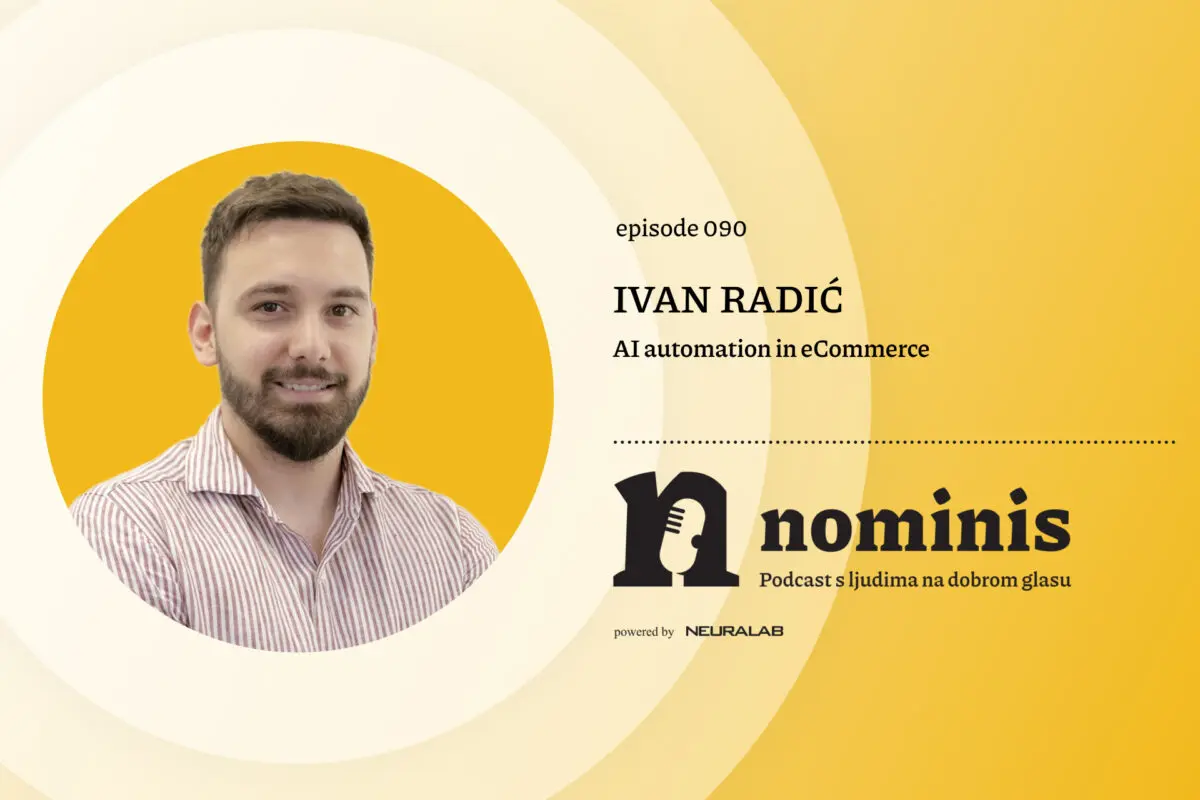
In Nominis episode 090, we talk about AI automation in eCommerce with Ivan Radić, who runs the Hedera and Apipet webshops. Ivan shares how automation helped modernize a family business, improve productivity, reduce manual work, and solve practical operational problems in online sales.
In the new episode of Nominis podcast which we are producing in partnership with the Association of eCommerce Croatia, Marcel Majsan spoke with Ivan Radić, director of the family company Hedera and co-founder of the Apipet brand.
Ivan describes himself as a “general practice entrepreneur” because he has worked across many parts of the business: customer support, performance marketing, email marketing, design, automation, and management. That broad experience helped him recognize which processes were slowing the company down and where technology could make the biggest difference.
Hedera was founded by Ivan’s father and built around high-quality supplements based on bee products. The company had strong products, but many business processes were outdated. When Ivan joined, invoices were still being written manually, operations were conservative, and the business needed a more modern approach.
That change led to serious growth. When Ivan became involved, the company had around 200,000 euros in annual revenue. Today, it reaches that level on a monthly basis.
The episode also covered the development of Apipet, a brand of supplements for pets. Although the first products existed before Ivan joined the business, the brand became more personal after his dog Pru was diagnosed with an aggressive pancreatic tumor. Apipet products helped her live much longer than expected, which gave Ivan a strong reason to develop the brand further.
Today, Apipet is one of the leading Croatian webshops for pet supplements. Its growth came step by step, through conversion optimization, better average order value, more efficient marketing budgets, and a careful approach to every part of the customer journey.
Automation is most useful when it starts from a real business bottleneck. AI was not a trend to follow, but a way to solve specific problems: returned orders, manual tracking, content workflows, bank transaction reminders, and repetitive marketing tasks. The value is not in using AI for its own sake, but in removing friction where the business is already losing time, money, or focus.
One of the biggest operational challenges was unclaimed orders. In the last nine months, Ivan said they lost around 30,000 euros because of orders that customers did not collect. Since cash on delivery used to make up almost 70 percent of orders, the team started charging extra for that payment option and encouraging card payments and parcel locker delivery.
To handle returned orders more efficiently, Ivan first tried using Google Sheets, automated emails, and sorting rules. When that became too messy, he created an app through vibe coding, using chat-based instructions to generate the code. The result was a system for tracking returned orders, managing statuses, and recovering around 50 percent of returned shipments.
The company also automated parts of its marketing system, including the ambassador program for content creators, YouTube publishing based on Instagram posts, and reminders connected to bank transactions.
Looking ahead, Ivan believes AI agents will change the way online buying works. Product visibility may no longer depend only on the homepage, ads, or webshop layout. If agents compare data across stores, businesses with clear product information, strong databases, and real competitive advantages could be in a better position.
He also expects two layers of the web to develop: one made for people, and another made for agents. In that environment, data quality and ownership of customer and product databases will become even more important.
The episode ends with a practical message for eCommerce businesses: automation should begin where the business feels the most pressure. Start with the process that wastes time, creates avoidable costs, or slows down growth, then build from there.
You can check the video recording of Nominis 090 on the official YouTube channel of eCommerce Croatia.

A Boletus aficionado who loves to get lost in the woods. He's still holding dearly to his OG Canon 5DmII while claiming that the play button is the apex call-to-action button on the web.