

The AI bubble in 2027: Agents, juniors, layoffs and the book that ties it all
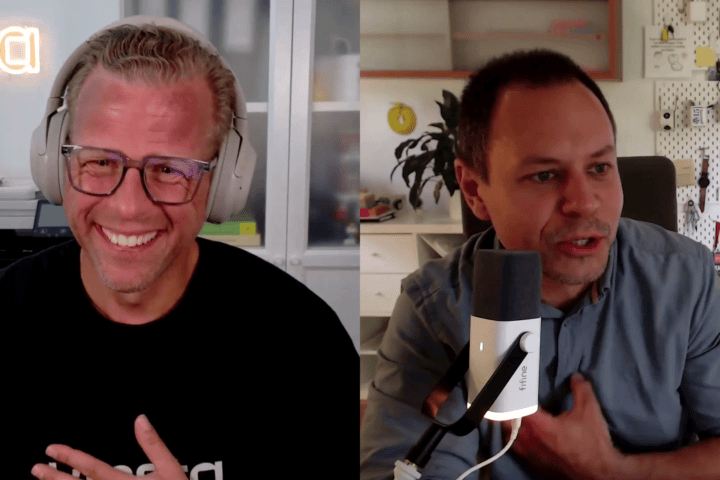
A year ago, we discussed whether there was an AI bubble, how sustainable the development of artificial intelligence was, and how the new technology would affect the IT industry. A year later, we brought the same guests back together to see whether their predictions had come true and what had changed in the meantime.
What happens when AI’s promises collide with reality? While technology companies invest billions in artificial intelligence, developers are facing changes in their day-to-day work, juniors are finding it increasingly difficult to get their first break, and companies are only beginning to discover how demanding it is to integrate AI into their operations.
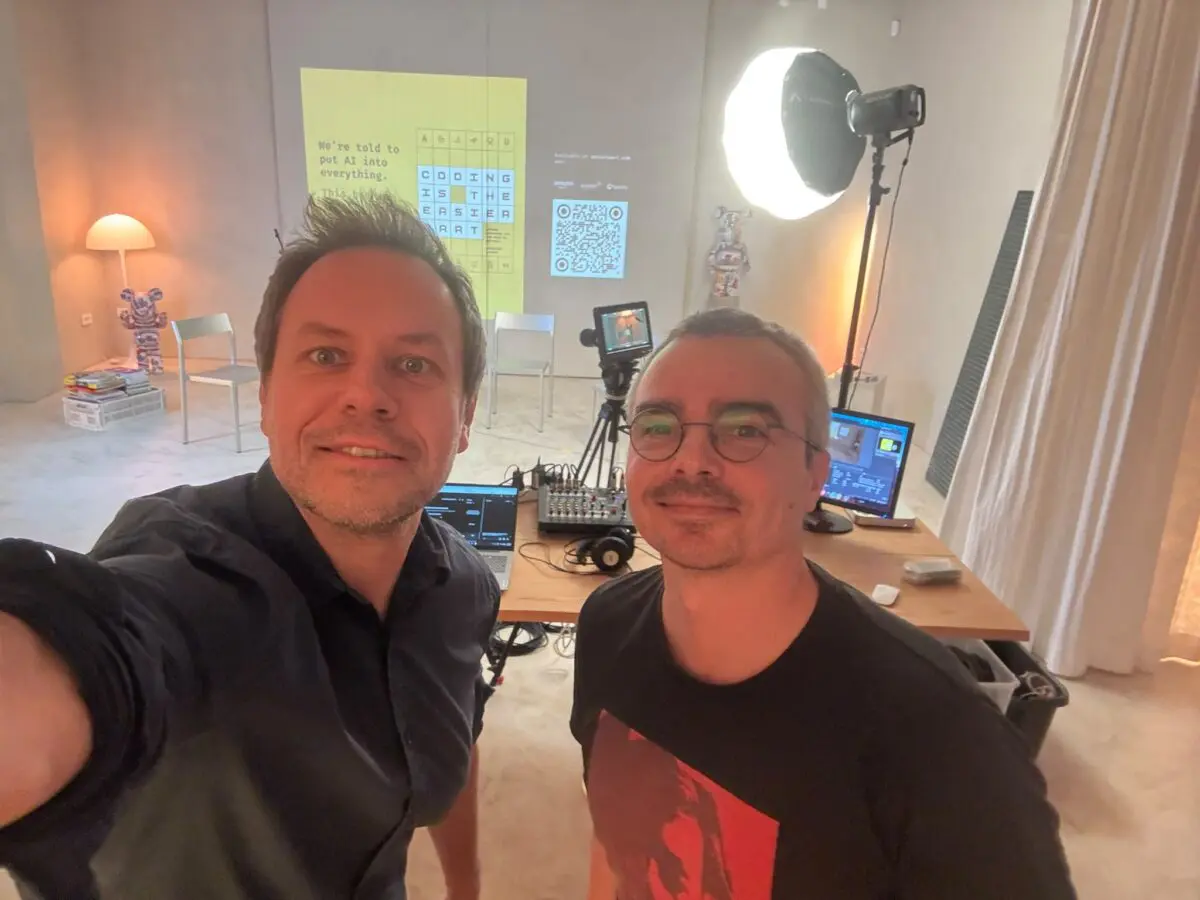
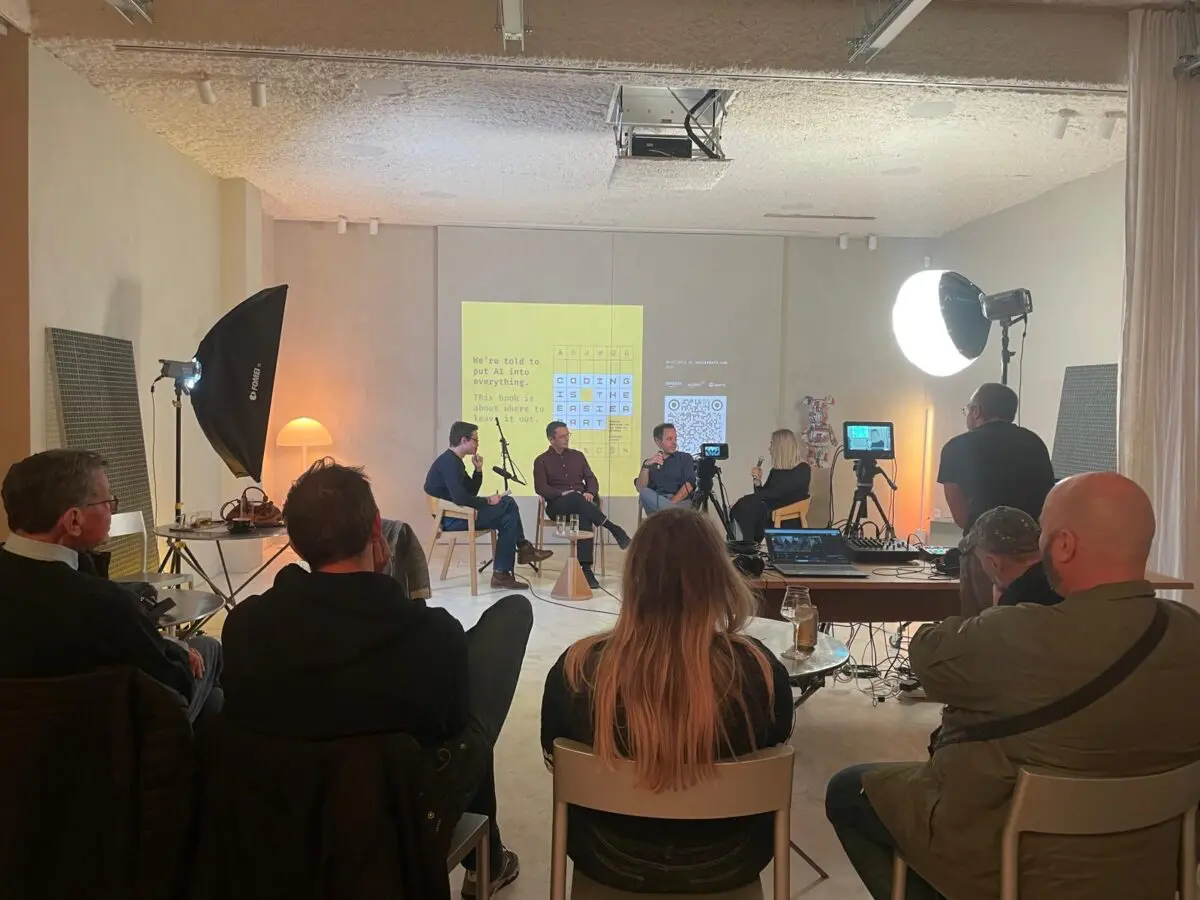
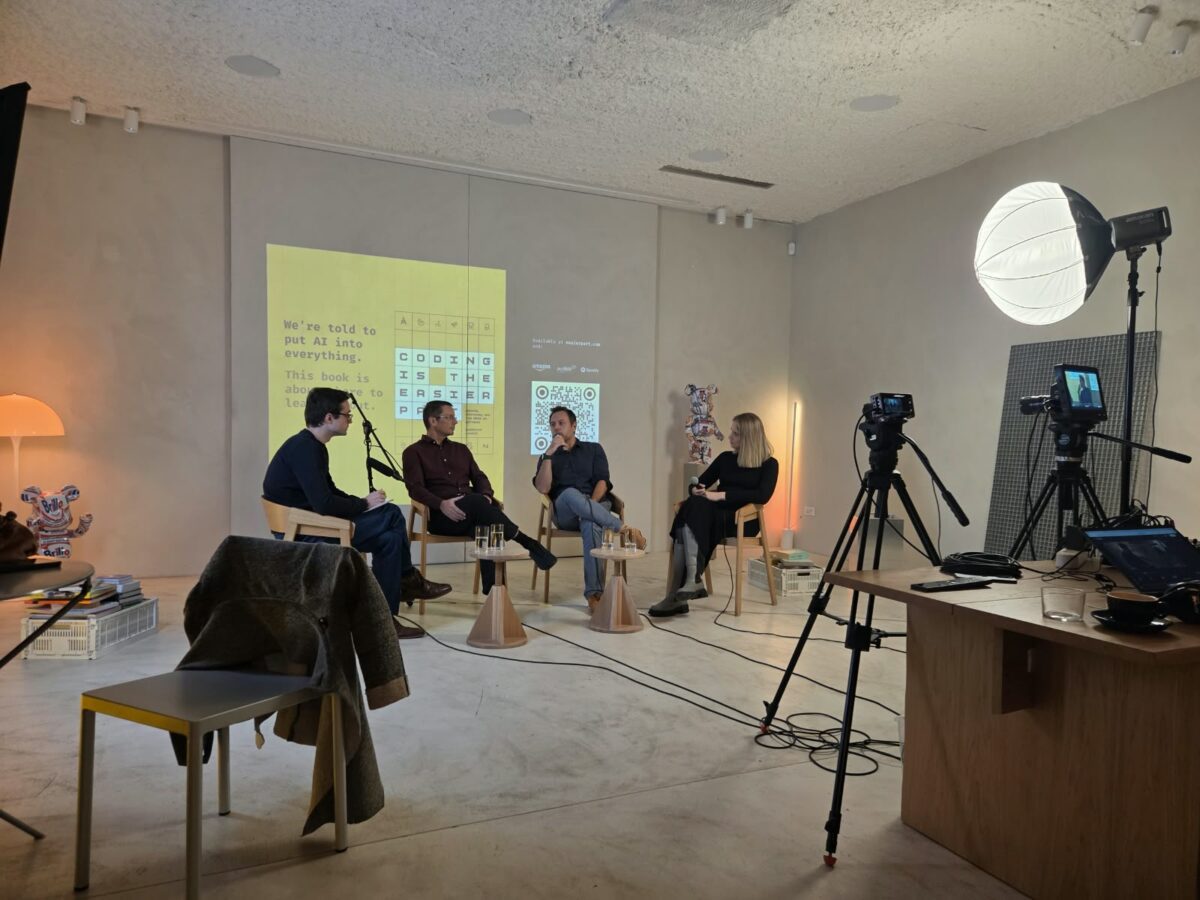
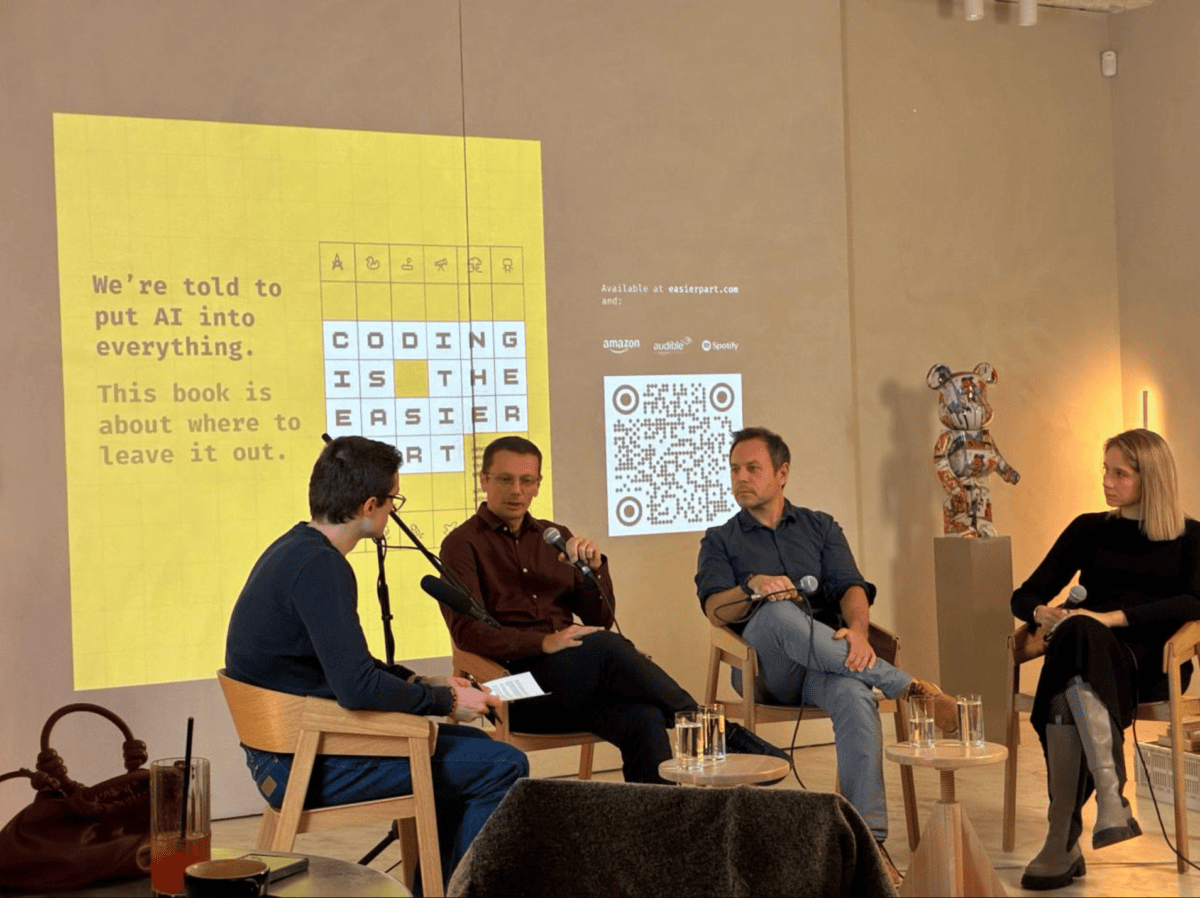
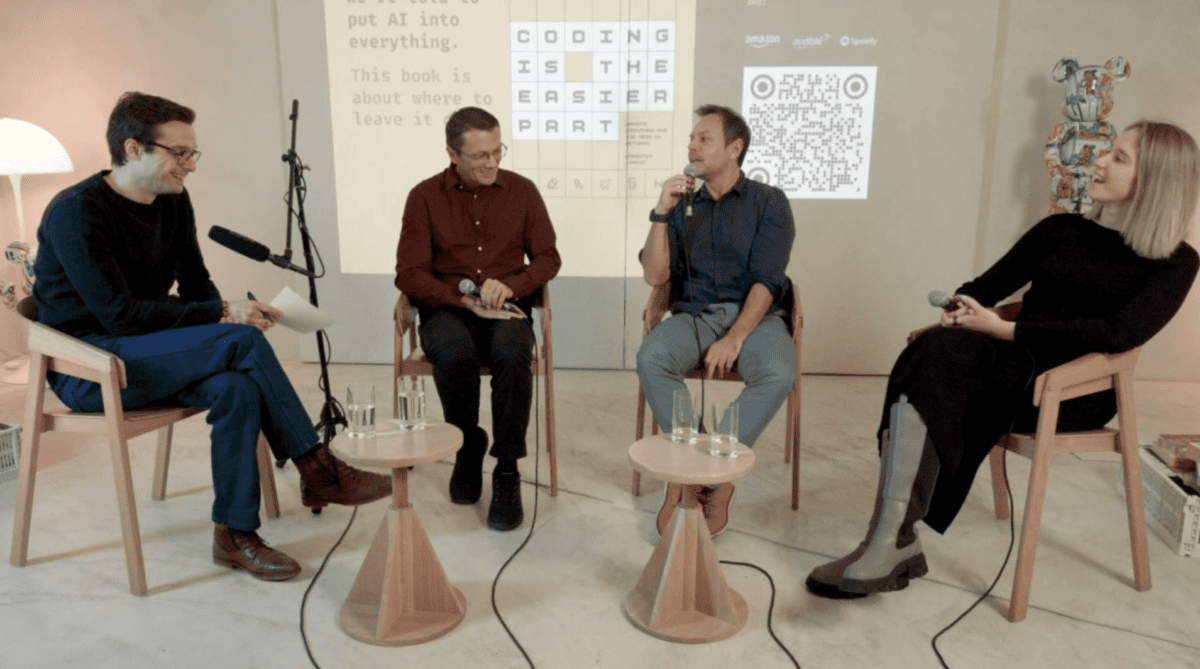
In a special live episode of the Netokracija podcast, we spoke with Dina Hrastović, Head of New Business at Presshaus; Senko Rašić, founder of Dobar kod; and Krešimir Končić, founder of Neuralab. The discussion covered AI investment, implementation within companies, the future of developers’ jobs and the position of juniors, and concluded with the presentation of Krešo’s book, Coding Is the Easier Part.
Although their assessments differ in some respects, the guests broadly agree on one thing: the AI bubble is unlikely to burst suddenly, but there is still a substantial gap between what the technology promises and what companies manage to put into practice.
Don’t feel like listening or watching? With the help of AI transcriber and translator, here are the key moments…
The AI bubble is growing, but nobody expects a sudden crash
Marin: Is there an AI bubble, and is it bigger today than it was a year ago?
Senko: I would say there is, and that it is bigger. As I said last year, I don’t think it will burst. I think we still have a long and demanding process ahead of us as we implement AI across different areas of business.
Dina: I would say that perhaps we need to stop seeing every new wave of technology as a bubble, or at least redefine what we mean by the term. We have seen enough technological waves to recognise that some of this simply reflects the technology industry’s usual dynamics. I don’t think the bubble will burst. In fact, I would say the risk of that happening is lower than before, partly because this year’s investments and commitments have extended into energy and telecommunications infrastructure.
Senko: The hype is still there, and on the financial side we continue to see high expectations and major investments. But reality is slowly catching up with them. Corrections have already begun, and parts of the market are becoming aware that some expectations and figures may be unrealistic. I would expect gradual deflation rather than a major, explosive crash.
Krešo: I think it is important to speak to the people working on integrating and implementing the technology, too. Last year, someone in the comments below our episode complained that we lacked experience because we didn’t work at leading AI labs. Yet the people working with clients across different industries are precisely the ones who can see what is actually happening. We work with companies in pharmaceuticals, logistics, retail and other sectors. We know which problems are real, what is feasible and where the technology runs up against its limitations. Engineers and designers implementing tools in real business environments have an important perspective that we should not overlook.
What does it actually mean to be an AI-first company?
Senko: Could we say that most companies presenting themselves as AI-first today don’t actually depend that heavily on artificial intelligence, and that it is more a matter of marketing?
Senko: I wouldn’t entirely agree. AI-first is a fairly elastic term, and there is certainly plenty of marketing and exaggeration involved. On the other hand, AI has proved useful in various niches, such as finance, human resources and security. The question is whether we are talking about companies that are genuinely AI-first or those that are AI-enabled. I think very few companies would have to close their doors if AI disappeared, but the technology is gradually finding its way into more and more business processes.
Krešo: A good example is a startup developing an agricultural robot. The robot moves through a vineyard or field and carries out certain tasks. But the problems a company like that is working on have been around for decades. We were dealing with them at university back in 2005. Today, a company like that presents itself as an AI startup, even though many of its challenges have nothing to do with large language models or generative AI. There are physical challenges, farming itself and everything the robot needs to be able to do in a real environment.
Dina: I think AI-first is often more of a positioning label than a precise description of a business. The term can mean different things to different industries and departments. It can mean that a company wants to build a culture in which employees are expected to learn about AI and use it to improve their work. For a startup seeking investors, on the other hand, it can mean that AI will play an important role in its core product.
It is a little like the trend of labelling products as vegan, even though some of them have always been vegan. The label helps communicate with the market and responds to demand, but it does not necessarily mean the product or business has fundamentally changed.
There is a long road from an AI pilot to actual implementation
Marin: Over the past year, have companies implemented AI more because of the hype than out of a genuine business need?
Krešo: My first question would be whether they have successfully implemented it at all. I have worked with several clients, and these processes are very difficult. It is only when you implement a language model within a specific business process that you start discovering new bottlenecks and problems. That is why I think we should stop talking about AI in general terms and start being more precise about the technology and its particular implementation. Only then can we properly test a solution and understand what it can actually do.
Senko: There are plenty of pilots, initiatives and attempts to introduce AI. Some companies want to see what benefits they might gain, but some of it is certainly driven by the idea that everyone else is doing it, so we mustn’t fall behind. There is, however, a huge gap between launching an initiative and actually putting something into production. Companies often don’t understand how much work it takes to make something function reliably.
Dina: I think people often underestimate how important it is to understand the technology itself and how it fits into existing processes. You can’t simply switch on a tool and expect everything else to fall into place.
AI agents are more than hype, but they are no magic assistants
Marin: One topic that has grown in importance over the past year is AI agents. Unlike tools that simply respond to prompts, agentic systems can use other tools, perform a series of tasks and make decisions within defined parameters.
Senko: I don’t think agents are just another wave of hype. There are specific cases where they can do something that would take a person a great deal of time. For example, I used an agent that took data from Google Sheets and transferred it to WordPress via MCP. That took care of a job that might otherwise have taken a week, or that we might never have done at all.
Dina: Agents are also important because they encourage people to learn more about artificial intelligence. When people see a tool complete a specific task, they start thinking about what else they could do with it.
Krešo: Still, we need to be careful about the expectations we create simply by using the word “agent”. People may assume it means an autonomous assistant that will solve all their problems on its own. In reality, these systems have limitations. We need to understand what we can entrust to them, how to control them and where we need to check the results.
Developers’ work has changed faster than expected
Marin: Has developers’ work changed more quickly over the past year than you expected?
Senko: AI tools for writing code and generating solutions have become part of everyday work. They are no longer used only for experiments. Developers are increasingly incorporating them into their workflows.
Krešo: I have to admit that adoption happened faster than I expected. I would say that around 80 per cent of developers now use AI in some form, at least based on what I see in the industry. But that does not mean developers’ jobs have disappeared. The distribution of work is changing. If a tool can generate code, more time can go into reviewing, testing and checking it.
It is important to distinguish between code that can be written, code that is technically correct and code that actually provides a good solution. Those are not the same thing. I think we have a long-running debate ahead of us about how applications should be developed and what we consider quality code in the first place.
Krešo: I also don’t think companies should simply decide that every employee must use AI for every task. They need to look at the specific work involved and assess where the technology makes sense.
Vibe coding can create problems that developers have to solve
One consequence of the spread of AI tools is that people without technical knowledge can build an application prototype relatively quickly. The problem arises when that prototype starts being treated as a finished product.
Senko: What often happens is that someone in management or another department builds something with AI, sees that it works, and then comes to the developers expecting them to tidy it up a little and put it into production. But a prototype that appears to work at first glance is not necessarily secure, reliable or ready for real use.
It may contain security vulnerabilities, expose data or create financial and operational problems. Just because something works in a demonstration does not mean it is ready for users.
Krešo: We also need to ask whether it is worth developing our own software for every problem in the first place. If you build an application, someone has to maintain it, connect it to a CRM or ERP, and take care of hosting and every other part of the system. Sometimes it is better to use an existing commercial or open-source solution.
I don’t like the narrative that software is dead, or that we no longer need to develop software because AI can generate code. Software is changing, and new possibilities are opening up along with it. But that does not automatically make every idea for a new application a good investment.
Will AI merge development roles with other business roles?
Dina: If some of the work is automated and the tools become more capable, will team structures change too? Could we reach a point where one agent manages other agents, changing the way people organise their work?
Senko: I think we are more likely, at first, to see existing roles expand than entirely new professions emerge. A developer might take on more tasks related to product, QA, business analysis or DevOps. Roles will overlap to some extent, but I don’t expect everything to change overnight.
Krešo: A great deal will depend on the labour market. Technology alone will not necessarily determine whether roles become more specialised or merge. Companies will decide how to organise their teams and which skills they need. AI is one factor, but it is not the only one.
Will AI create jobs or eliminate them?
Marin: Will artificial intelligence ultimately create more jobs or eliminate them?
Krešo: I think there will be a need for people who can coordinate different tools, connect them and make sure the whole system works. Today, we have many AI solutions that do individual things but are not necessarily connected to one another. People will still be needed there.
I wouldn’t say we are already seeing some major, across-the-board increase in productivity, either. Implementation is still quite uneven. Companies are introducing tools in different parts of their operations, but that does not mean they have suddenly become more efficient as a whole.
Dina: From the perspective of media and content production, things look different. A language model can produce an article in less than a minute based on a set of parameters. Of course, there is the question of the quality of that content. But if the only criterion is the number of clicks, it raises the question of why a company would still need a person to do that job.
Senko: I think expectations of people will increase. If we can produce more with AI, companies will expect us to produce more. That does not necessarily mean they will immediately lay off all their employees, but it could mean hiring fewer people and placing more work and pressure on existing staff.
Krešo: AI could allow developers to devote more time to quality, for example by writing unit, integration or mutation tests. We could end up with better software.
Senko: But there is an issue with business incentives. Companies often don’t reward quality in the way we might expect. In practice, delivering a new feature as quickly as possible takes priority over investing extra time in testing and quality.
Krešo: That reminds me of how companies adopted Agile. Many took on the terminology and ceremonies without necessarily embracing the substance of that way of working. Something similar could happen with AI: companies will say they use it, but that does not mean they have truly changed the way they work.
Juniors are under pressure, but new technologies also open up opportunities
Marin: What does all of this mean for juniors who are just entering the industry?
Krešo: I think juniors are in a difficult position primarily because of the state of the IT market, rather than AI alone. Agencies and large software companies do not necessarily need to hire large numbers of new people at the moment. But that does not mean juniors have no options. They can develop their own products, work for smaller agencies, help nonprofits and build a portfolio through concrete projects.
On the other hand, I think being young right now is also a considerable advantage. The tools allow people to experiment and build things that previously required far more resources. They should think beyond getting a job at an existing company and consider what new opportunities might open up.
Figma is one example. Photoshop and Sketch were the main tools for web design for a long time. Then Figma came along and adopted the kind of collaboration we know from Google Docs. It allowed designers, clients and developers to collaborate on the same design. That change had a significant impact on how the industry worked. It involved more than improving an existing tool; it required coming up with a different way of interacting. I think that presents an opportunity for younger generations.
Dina: I would say young people are partly protected by companies’ interest in Gen Z. Employers need new blood, and employer branding has become an important part of business. But I would advise anyone struggling to find work to look at niche companies and industries as well.
Those companies often have trouble finding people for mid-level and senior positions, so they build their hiring strategies around finding young talent and retaining them for as long as possible. That applies to other business functions as well as developers.
Will the AI bubble burst next year?
Marin: To finish, the same question we asked last year: will the AI bubble burst next year?
Krešo: No. I think further corrections are possible, but not a sudden crash. I would like to see Anthropic or OpenAI go public, because that would give us a better view of their actual costs and financial results. It would help us understand what is realistic and what is not across the industry.
Above all, I think the demand for software and intelligence is practically unlimited. We have only begun to explore what we can do with software. Our industry is very young compared with other fields of human creativity. As the market becomes better informed and people discover new possibilities, demand for these tools will only grow.
That does not mean current business models are sustainable. There may be corrections, and perhaps the biggest winners will ultimately be companies that are already large and have enough capital to withstand those changes. Apple, Microsoft, Amazon and Meta have the resources to weather market corrections.
Senko: I agree that there will be further corrections, but I don’t expect a full-scale collapse.
Dina: I don’t think it will burst. The major technology companies have already committed to enormous infrastructure investments. Those investments and contracts mean that a large part of this development is already tied into future plans, both financially and commercially. I think the biggest winners will be those that have already been at the top for some time.
There has also been talk recently of AI slowing down, but the question is how much of that represents a real change in direction and how much is a response to the negative narrative that has dominated parts of the public debate. In any case, I don’t expect a sudden crash.
Krešimir Končić: People are the connective tissue between AI tools
At the end of the conversation, Krešimir presented Coding Is the Easier Part, the book he had been working on for the past few years. It explores the relationship between people, machines, software and teams, and how a growing number of automated tools fit into business processes.
Marin: Krešo, you’ve published a book. Can you tell us what you’ve been working on over the past few years?
Krešo: The book explains the mess between the people who make things and the machines they use. We keep making our software, teams and companies more complex, and that process is not going to stop. We have only begun to discover what we can do with machines and what challenges lie ahead.
One of the book’s main ideas is that people who make things should experiment, play, write, communicate and try new tools. But it is important to implement those tools selectively, where they make sense. You can explain this through the example of household appliances. In our living rooms or kitchens, we have robot vacuum cleaners, washing machines and tumble dryers. Each appliance performs a particular task, but they are not necessarily connected into a single system. Modern companies are similar. AI might help manage an inbox without solving the entire process. It might help with a CRM, but only with a particular part of it.
The problem is that these pieces of automation are often disconnected. We are still the ones joining them together. People are the connective tissue that gives different tools meaning and allows them to function as a whole.
That is why we should experiment with new tools rather than fear them. The book also examines the narratives coming out of Silicon Valley and how technical nuances have been pushed out of public debate over the past few decades. I think engineers should communicate better. It is better to turn an excellent engineer into a good communicator than to try to turn an excellent communicator into a half-trained engineer.
Silicon Valley should not be our only compass for the future of software. We should not uncritically accept narratives declaring that something is dead, or that we no longer need to educate people for particular professions.
The book is available on Amazon, Audible, Google Play, Spotify and other book-selling platforms.

Krešimir Končić is the founder and CEO of Neuralab and a longtime columnist for Netokracija. He has been working with software since the mid-1990s, and since 2007 has built complex digital and eCommerce projects through Neuralab for clients across Europe and the United States. He writes about software, artificial intelligence, technology, and the human forces that regularly complicate all of it. He is the author of Coding Is the Easier Part: Makers, Machines, and the Mess in Between.